
Booms for Arbor and Utility — Reach and Performance
Fixed and telescoping booms designed for arbor, utility and rental fleets provide controlled reach and dependable performance for elevated tasks. With robust mounts, integrated safety features and quick-attach compatibility, these boom attachments enhance machine flexibility and operator confidence. Whether trimming trees, installing utility poles or working at height, booms deliver extended access while maintaining stability and rated capacities. Equip your skid-steer or compact loader with a boom attachment that balances reach, safety and productivity.
Showing all 5 results
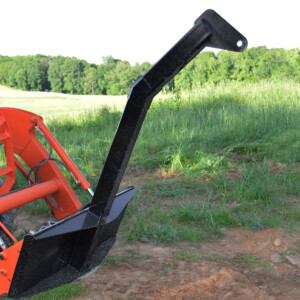
Booms — Reach Further, Work Safer: Precision Lifting & Tree-Work Solutions
Extend reach, improve control, and reduce risk. Our Booms category is designed for arborists, landscapers, municipalities, utilities, and rental yards that need safe, repeatable access to limbs, trunks, and hard-to-reach jobsite points. From heavy-duty fixed booms to compact telebooms for mini skid steers, these units put the working end where you need it while keeping the machine stable and the operator in control.
Why booms matter
Access, precision, and safety. A properly specified boom lets you position cutting tools, winches, or man-baskets with accuracy while minimizing ladders and manual rigging. The right boom reduces operator fatigue, improves cut quality, and lowers risk to ground crews and bystanders.
Booms we sell (at a glance)
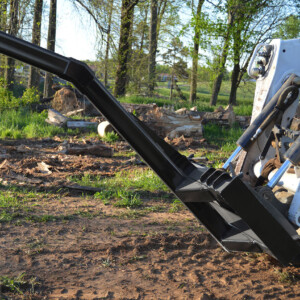
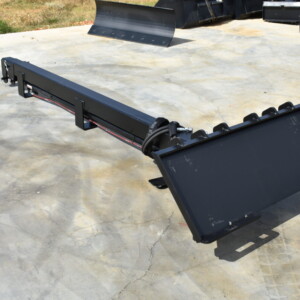
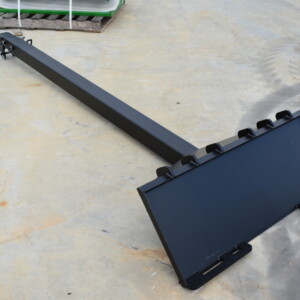
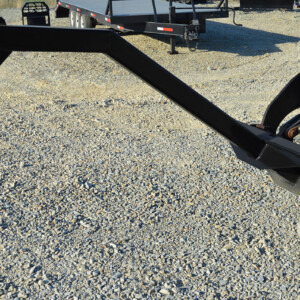
- Heavy Duty Tree Boom — reinforced fixed-mount booms for large arbor and utility work; engineered for maximum strength and long service life.
- Hydraulic Teleboom — hydraulically telescoping booms that extend/retract under power for fast, precise reach changes without repositioning the base machine.
- Manual Teleboom — mechanically telescoping designs that allow adjustable reach where hydraulic options are unnecessary or when simplicity and lower cost are priorities.
- Mini Skid Steer Tree Boom — compact, quick-attach booms made to mount on mini skid steers and compact loaders; ideal for tight jobsites and rental fleets.
- Standard Tree Boom — general-purpose booms that balance reach, capacity, and serviceability for everyday tree work and site maintenance.
Built for reliability
- High-tensile structural steel • engineered cross-sections where loads concentrate
- Full-penetration welds & gusseting in pivot and butt zones
- Replaceable wear pads & bushings at pivots for long life and field serviceability
- Sealed hydraulic cylinders & protected hose routing (for hydraulic telebooms)
- Factory corrosion protection — primer + powder coat (e-coat available)
- Safety features — relief valves, travel stops, and clearly posted capacity charts
Spec & compatibility notes
- Rated capacity is published at specified outreach and angle — capacity decreases as reach increases (moment limits).
- Mounting interface — plate-mount, pinned subframe, and quick-attach patterns available; confirm coupler/pin spacing and machine counterweight before ordering.
- Hydraulic requirements — hydraulic telebooms list flow (GPM) and pressure (PSI) requirements; match pump flow or use a prioritized circuit for consistent operation.
- Stability & ballast — some heavy-duty booms require counterweight, outriggers, or pads to maintain rated capacities at full reach.
- Control options — mechanical linkage, hydraulic joystick, or proportional electronic control choices depending on precision needs.
Use-case wins
- Heavy Duty Tree Boom — remove large limbs and lower sections of big trees without a truck-mounted crane.
- Hydraulic Teleboom — extend to upper limbs and retract for transport without repositioning the machine.
- Manual Teleboom — economical reach adjustment for occasional longer cuts and rental fleets.
- Mini Skid Steer Tree Boom — perform arbor work in gated yards, parks, and tight urban spaces where full-size gear won't fit.
- Standard Tree Boom — everyday trimming, storm cleanup, and utility clearance where balance of reach and simplicity is needed.
Pro Tip: Always consult the boom's outreach vs. capacity chart and account for dynamic factors (wind, swinging loads, tool weight). When mounting on smaller platforms, fit the largest practical counterweight and use stabilizers if available to preserve rated safety margins.
FAQs
Which boom fits my machine?
Fit depends on the mounting interface (plate, pinned subframe, or quick-attach), machine rated lift/moment capacity, and intended outreach. Match the boom's stamped mounting pattern and rated lift/moment to your machine's published capacities — if you plan to work at maximum reach, confirm required ballast or outriggers with the manufacturer.
What is the difference between a hydraulic teleboom and a manual teleboom?
A hydraulic teleboom extends/retracts using the machine's hydraulic system or a dedicated actuator for on-the-fly adjustments. Manual telebooms use mechanical locks, pins, or screw actuators to change length and are typically lighter and lower-cost. Choose hydraulic for frequent, precise reach changes; manual for occasional adjustment and lower maintenance.
Can I install a mini skid steer tree boom on any mini skid?
Most mini skid booms are built for common quick-attach patterns, but variations exist. Check pin spacing, plate height, and the machine's rated lift and hydraulic flow (if hydraulic). We provide dimensional drawings and recommended compatibility for each mini skid boom.
How do I know the safe working load at full extension?
Every boom has an outreach vs. capacity chart published with the product. SWL at a given outreach is determined by the boom's moment capacity and the machine's stability. Use the lower of the machine's and boom's published limits and never exceed SWL under dynamic or side-load conditions.
Do telescoping booms need special hydraulic flow or pressure?
Yes — hydraulic telebooms list required flow (GPM) and pressure (PSI). If your machine cannot supply the specified flow, extension speed and control will be compromised. Some telebooms include flow dividers or compensators to operate on lower flows but verify the spec sheet before purchase.
Will a boom change my machine's tipping characteristics?
Yes — adding reach and lift changes center of gravity and can reduce tipping thresholds. Always follow guidance for counterweights, outrigger use, and maximum outreach while loaded. Travel with loads low and avoid sudden movements when the boom is extended.
What maintenance does a boom require?
Inspect welds, pivot bushings, pins, and hydraulic hoses regularly. Grease pivot points per schedule, check cylinder rods for nicks or leaks, replace worn bushings and pads, and keep the capacity decal readable. Replace damaged hydraulic hose immediately.
Can I use tree-cutting tools (saws, grapples) on the same boom?
Yes — many booms are configured with universal tool mounts or quick-attach plates. When adding tools, account for tool weight in the outreach vs. capacity calculation and ensure hydraulic tool lines are protected and compatible.
Are booms shipped fully assembled?
Shipping varies by model and carrier. Many heavy-duty booms ship partially assembled with mounting hardware and instructions; mini skid booms often ship ready to couple. Shipping configuration is noted on each product page.
What controls come with hydraulic booms?
Options include proportionally-controlled joysticks, on/off valve banks, or machine-integrated electro-hydraulic controls. Proportional controls are recommended for precise placement and aerial work.
How do I measure to order the correct boom?
Measure (1) mounting plate or pin center spacing, (2) plate height and thickness, (3) required maximum outreach and working angle, and (4) hydraulic flow & pressure if selecting a hydraulic teleboom. Compare these to the product drawing before ordering.
Do booms require operator training or certifications?
Yes — safe boom operation requires training on load charts, stabilizer/outrigger use, and procedures for working near power lines. When using a man-basket or performing aerial work, follow applicable OSHA/ANSI standards and local regulations.